A Look Into The Potential Customers Of Sight: How Laser Eye Surgeons Modification People'S Lives
Short Article By-Robertson Armstrong
In a world where good vision is crucial for routine activities, the role of laser vision correction specialists has become progressively critical. These talented professionals dedicate their careers to transforming lives through advanced laser eye surgery procedures. With the ability to address frequent eyesight issues, including myopia, hyperopia, and astigmatism, LASIK surgery has allowed countless individuals to enjoy a life without the constraints of glasses and contact lenses.
As technology has evolved, so has the field of refractive surgery. Many choose to seek out an seasoned LASIK surgeon who can offer tailored treatment and the cutting-edge technology in treatment. Among these innovations is all-laser LASIK, which utilizes accuracy and safety to further enhance the surgical experience. By incorporating advanced laser systems, expert laser eye surgeons can now deliver patients with outcomes that were formerly unimaginable. This article will explore how these exceptional professionals are changing lives and the significant effect their work has on the world around us.
Tech Improvements in LASIK
The latest developments in LASIK technology have transformed the field of vision correction. The introduction of no-blade LASIK procedures has significantly enhanced patient satisfaction and accuracy. By using ultrafast lasers, surgeons can create exact corneal flaps without the need for the need for manual instruments, diminishing the probability of complications and enhancing recovery times. This innovative approach allows for a more customized solution adapted to each individual's unique vision needs.
Furthermore, wavefront-guided LASIK has revolutionized how eye surgeons assess and handle refractive errors. This technology enables laser eye surgeons to chart the intricacies of a patient's vision with unmatched accuracy. By addressing not just myopia, hyperopia, and astigmatism, but also higher-order aberrations, wavefront-guided LASIK provides patients with clearer and more vivid vision post-surgery. The improved accuracy in treatment results has encouraged greater patient trust in the LASIK procedure.
The melding of sophisticated diagnostic tools and laser technologies continues to enhance the surgical process. With live imaging and tracking systems, skilled LASIK doctors can modify laser procedures even during the procedure for ideal results. This level of accuracy lowers the chances of human error and enhances visual results, solidifying LASIK as a premier option for those seeking corrective eye procedures. As innovation progresses, the prospects of LASIK promises even more efficient and safe solutions for vision improvement.
The Bladeless LASIK Revolution
The introduction of bladeless LASIK has changed the field of vision correction, providing patients with a safer and more comfortable experience. Unlike traditional LASIK, which used a mechanical blade to create a flap in the cornea, the blade-free technique employs a femtosecond laser to achieve this accuracy. This improvement has significantly reduced the risk of complications and has garnered the confidence of both surgeons and patients alike.
One of the key advantages of blade-free LASIK is its ability to improve accuracy and personalization. The laser flap creation reduces human error and allows for a better catered approach to each individual's unique eye anatomy. Patients often experience a faster recovery time and less postoperative discomfort, leading to a better overall experience. By removing the blade, surgeons can now offer a gentler procedure with results that often exceed those achieved through traditional methods.
As a consequence, many seasoned LASIK surgeons have embraced this technology and made it the norm in their clinics. This change represents a commitment to providing the highest level of care, aligning surgical techniques with the newest technological advancements. Blade-free LASIK not only exemplifies the evolution of vision correction but also highlights the continuous commitment of laser eye surgeons to enhance patient outcomes and quality of life.
Individual Stories and Improvements
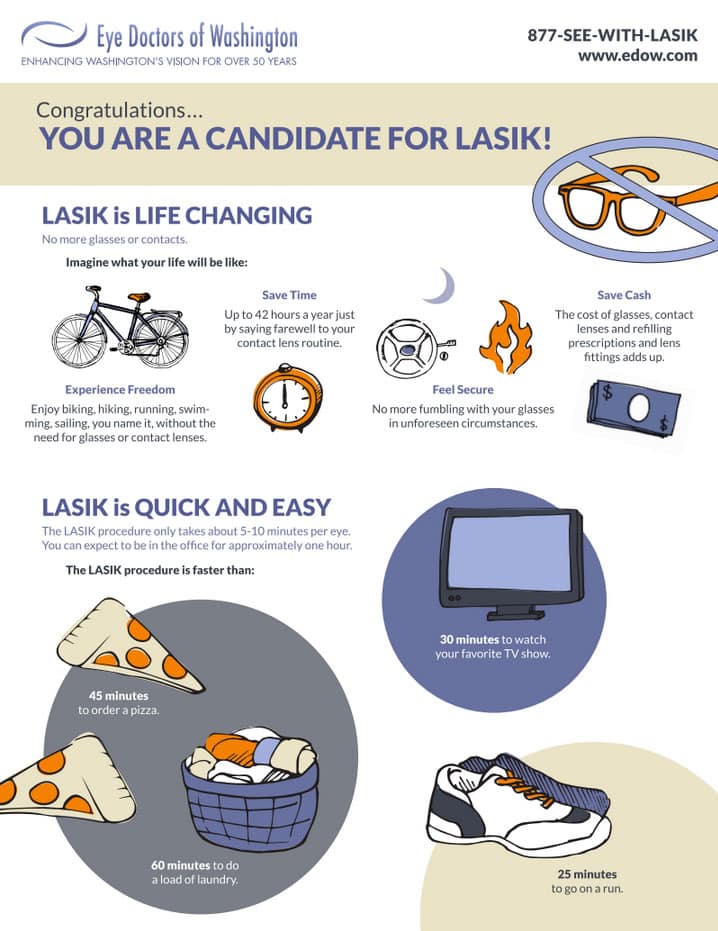
Several patients describe life-changing events after undergoing LASIK operation with an skilled LASIK specialist. They often tell accounts of how their vision enhancement has transformed their daily lives, enabling them to take part in activities that were previously difficult or impossible due to poor eyesight. Simple thrills such as perusing a book lacking glasses, taking part in unplanned outdoor activities, or playing sports can become a fact, leading to a revitalized sense of freedom and enjoyment in life.
A number of patients choose a bladeless LASIK procedure, which provides a more precise and comfortable experience. https://www.softwareadvice.com/medical/medflow-ophthalmology-emr-profile/ discuss the minimal downtime and fast recovery associated with this advanced method. The positive improvements are not just limited to physical vision but reach emotional and psychological gains as well, with improved self-esteem and confidence following the surgery. The accounts illustrate how these enhancements can positively influence connections and professional potentials.
In recounting their life-altering paths, various clients express thankfulness towards their laser eye doctor for not only delivering exceptional results but for giving reassurance and support throughout the journey. The personal connections formed between individuals and their specialists often play a crucial role in alleviating fears and ensuring a positive experience. As patients welcome their new vision, they encourage others thinking about LASIK to take action toward a sharper, more colorful future.
Future Developments in LASIK
As tech continues to progress, the future of laser eye surgery appears bright, especially with improvements in tailored treatment. Expert Lasik surgeons are leveraging AI and data analytics to adapt procedures based on individual corneal topography. This tailoring not only improves the precision of the surgeries but also optimizes outcomes for patients, facilitating for faster recovery times and better sight.
Another area of notable growth is in no-blade LASIK techniques. These methods utilize ultra-fast lasers for corneal flap creation, reducing the risk of complications from traditional microkeratomes. As more laser eye surgeons implement these bladeless approaches, patients can look forward to procedures that are not only more secure but also more pleasant. The potential to perform flapless LASIK is also gaining momentum and could become a standard in the sector, providing even more choices for patients seeking visual enhancements.
Finally, we are likely to see a surge in combined treatments that integrate LASIK with other treatments to address various vision issues. For instance, some LASIK surgeons are exploring how to efficiently combine LASIK with ICL or cataract surgery. This integrated approach aims to cater to a wider range of visual impairments, ensuring that patients of all ages can benefit from state-of-the-art laser eye surgery techniques, paving the way for improved quality of life.